
A Beginner’s Guide to Yin Yoga
A slower, quieter style of yoga that invites you to settle into supported postures and simply notice. Here’s how to begin.
What makes Yin different?
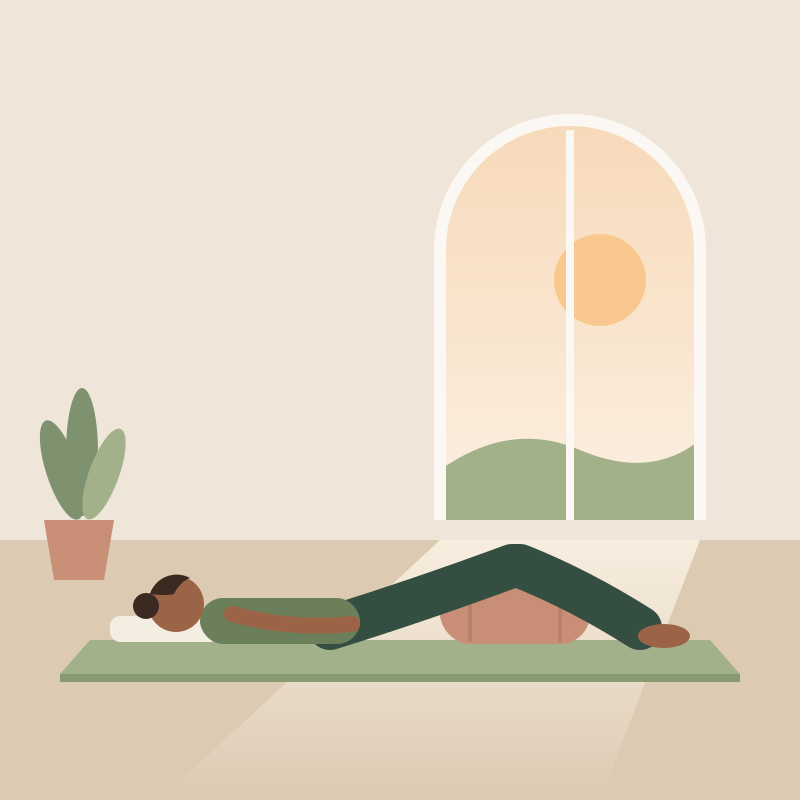
Many yoga classes flow from one posture to the next, building warmth and strength along the way. Yin takes a different path. Postures are usually practised on the floor and held for a few minutes at a time, with the muscles as relaxed as is comfortable.
Instead of asking “how far can I go?”, Yin asks “what do I notice?” You find a shape, support it with props, and let the breath and attention settle. It is less about achievement and more about patience.
Three simple principles
Teachers often describe Yin through a few guiding ideas. You may find them helpful to keep in mind:
- Find your edge — gently. Move into a posture until you feel mild, interesting sensation, then stop. It should never be painful or sharp.
- Settle into stillness. Once you are comfortable, try to stay with the shape rather than adjusting constantly. Stillness gives you space to observe.
- Hold with kindness. Stay for a while, but come out whenever your body asks you to. Ease out slowly and rest between postures.
Setting up with props
Props make Yin more comfortable and more accessible. You don’t need specialist equipment — most homes already have good alternatives:
- Bolster: a firm pillow, a couch cushion, or two blankets rolled together.
- Blocks: sturdy books work well for support under hands or hips.
- Blanket: for padding under knees, and for warmth during rest.
- Mat: a yoga mat, or a rug on a floor that won’t slip.
A good rule of thumb: if you’re straining, add more support.
“There is no perfect version of a posture — only the version that suits your body today.”
What your first online class may feel like
An online Yin session usually begins with a few minutes of settling — sitting or lying comfortably and noticing the breath. Your instructor will then guide you through a handful of postures, describing options and props as you go, before closing with a longer rest.
The first time, holding still can feel surprisingly unfamiliar. The mind may wander or grow restless. That’s completely normal. Simply notice it, take a breath, and return your attention to the sensations of the posture.
Practising safely
Yin is gentle, but it is still physical. Avoid forcing any posture, and come out straight away if you feel pain, numbness or tingling. If you have an injury, a joint condition or other health considerations, seek guidance from a qualified healthcare professional before practising and let your instructor know. If you’re pregnant, our Prenatal Yoga classes are designed with pregnancy in mind.
Your next step
Curious to try it with guidance? Explore our online Yin Yoga classes to see when sessions run.